

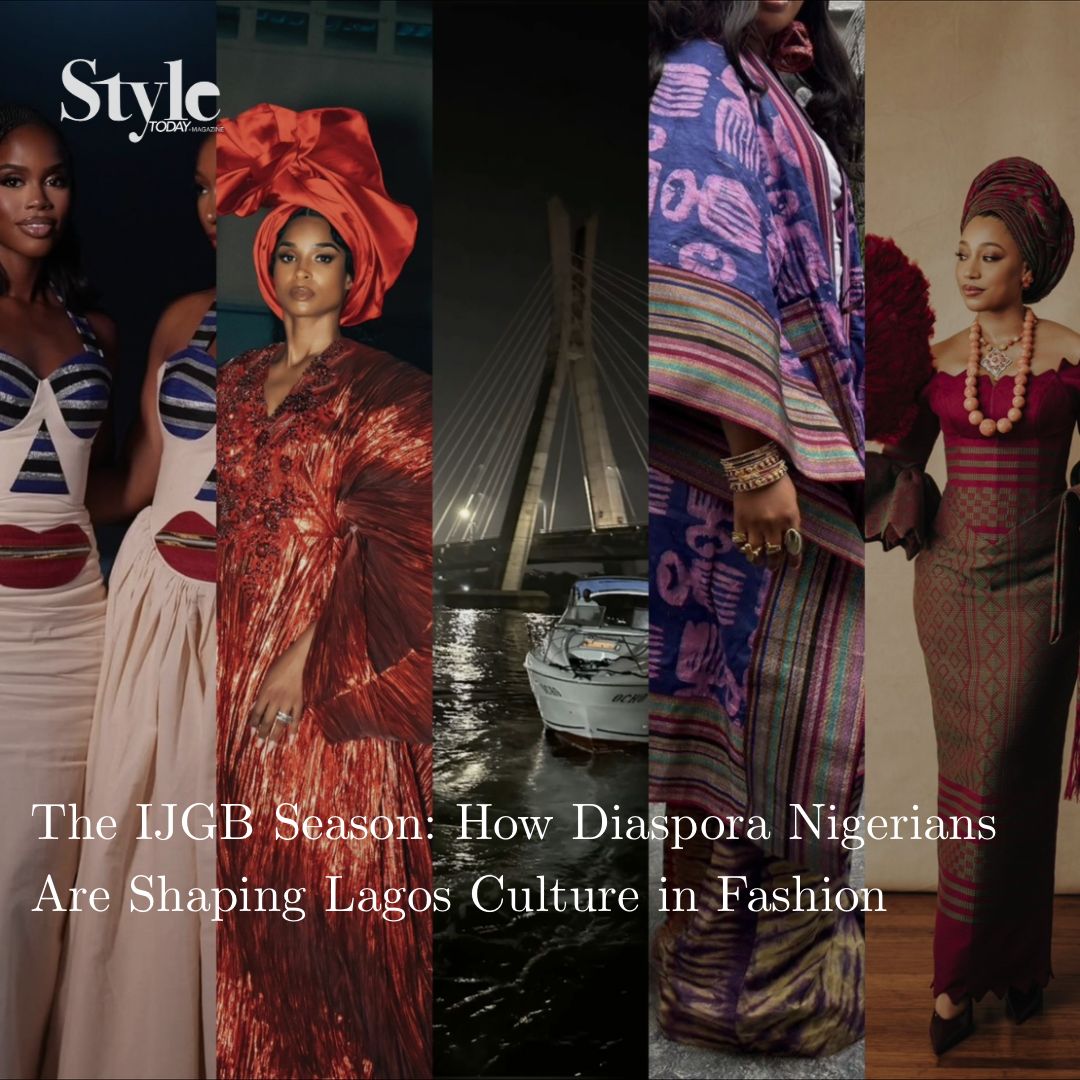
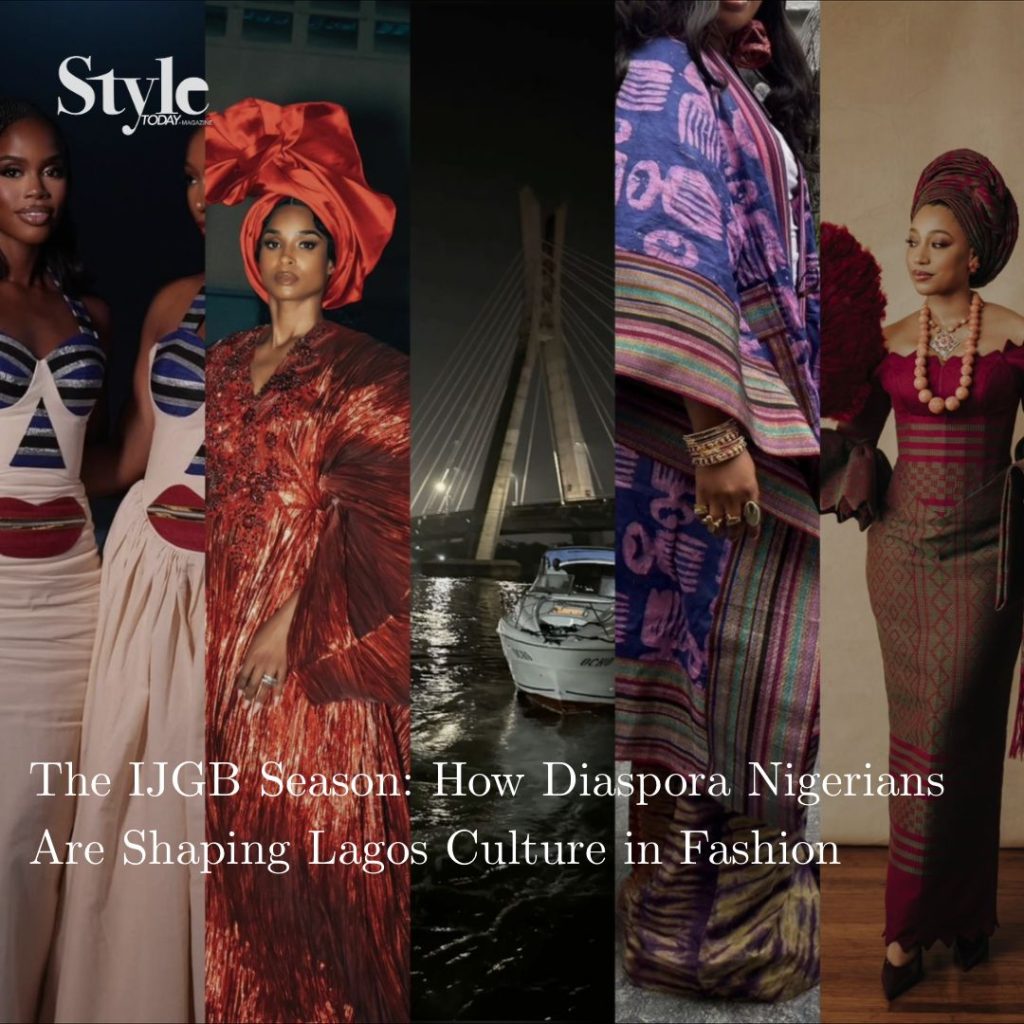
Every December, Lagos transforms. The energy multiplies, the parties are endless, and everywhere you turn, there’s a fresh accent in the air. The IJGBs are back.IJGB, “I Just Got Back”, is what Lagosians call Nigerians who live abroad and return home for the holidays. This year’s “Detty December” is predicted to see over 550,000 passengers arrive at Nigerian airports, generating $71.6 million in revenue. But beyond the numbers, there’s a deeper cultural exchange happening.
The Fashion FaithfulWalk through Victoria Island during December, and you’ll see something remarkable: Nigerians who’ve spent the year in New York, London, or Toronto dressed head-to-toe in Nigerian designers. There’s a beautiful loyalty here. While living abroad, many diaspora Nigerians become even more intentional about wearing Nigerian fashion, it’s their connection to home, their statement of identity.

Influencers like Eni Popoola (EniGivenSunday), a Nigerian-American blogger based in New York, have built platforms around this cultural pride. Through her #EniGivenSunday movement, she showcases how Nigerian heritage and contemporary fashion coexist beautifully. Content creators like Barely Bougie and others in the diaspora consistently champion home-grown designers, understanding that when you’re far from home, what you wear becomes who you are.
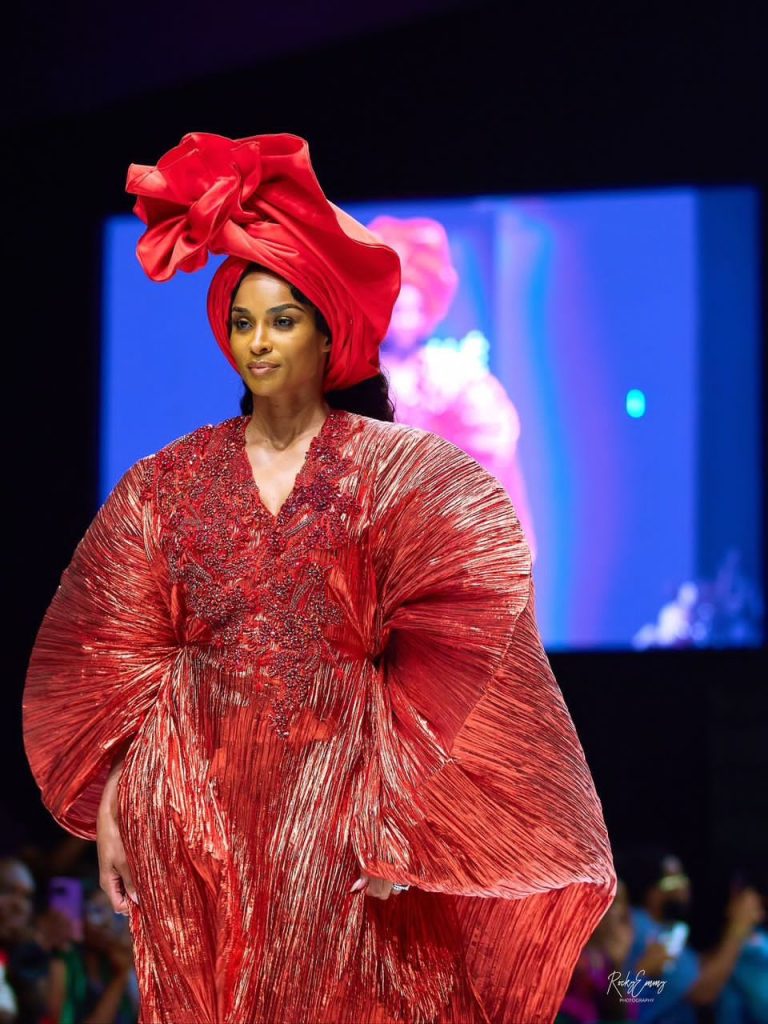
When Ciara Came to LagosOctober 2025 brought a significant moment for Nigerian fashion. Grammy-winning singer Ciara arrived in Lagos for the 15th anniversary of Lagos Fashion Week, and it was more than a celebrity appearance. After discovering through DNA testing that she had ancestral roots in the Benin Republic, her trip became a cultural homecoming.She closed the Fruché show in a fiery red sculptural dress with a perfectly tied gele. The crowd went wild. But perhaps the most telling moment was when she visited Balogun Market and told reporters she was impressed by how much Lagos had grown.
Having an international star of Ciara’s caliber not just attend but actively participate in Lagos Fashion Week sends a message to the global fashion industry: what’s happening in Lagos matters.
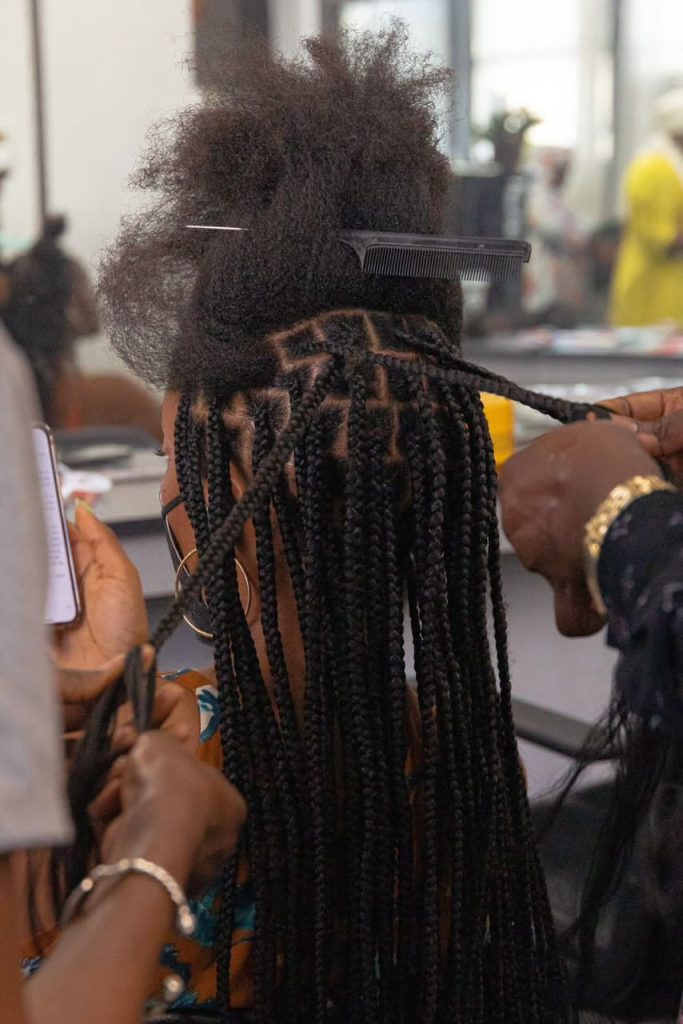
The Annual Pilgrimage to the Braider’s ChairAsk any IJGB about their December priorities, and getting their hair done is near the top of the list. For many Nigerian women living abroad, December in Lagos is a hair pilgrimage.The reasons are practical and cultural. In London, knotless braids might cost £100 or more. In Lagos? Maybe £18 at a local salon. But it’s not just about price. It’s about the experience, the skill level, and the comfort of being in a space where your hair texture is the norm.Helena Ibitayo, who grew up in London but visits Lagos twice a year, says simply: “I have a lot more confidence in the skill of braiders in Lagos.”The ritual is so ingrained that many IJGBs time their appointments strategically: get your braids done two days before your flight back so you’re returning with fresh knotless braids or goddess braids that’ll last weeks. It’s efficiency meeting culture, wrapped in the familiar soundtrack of salon gossip.
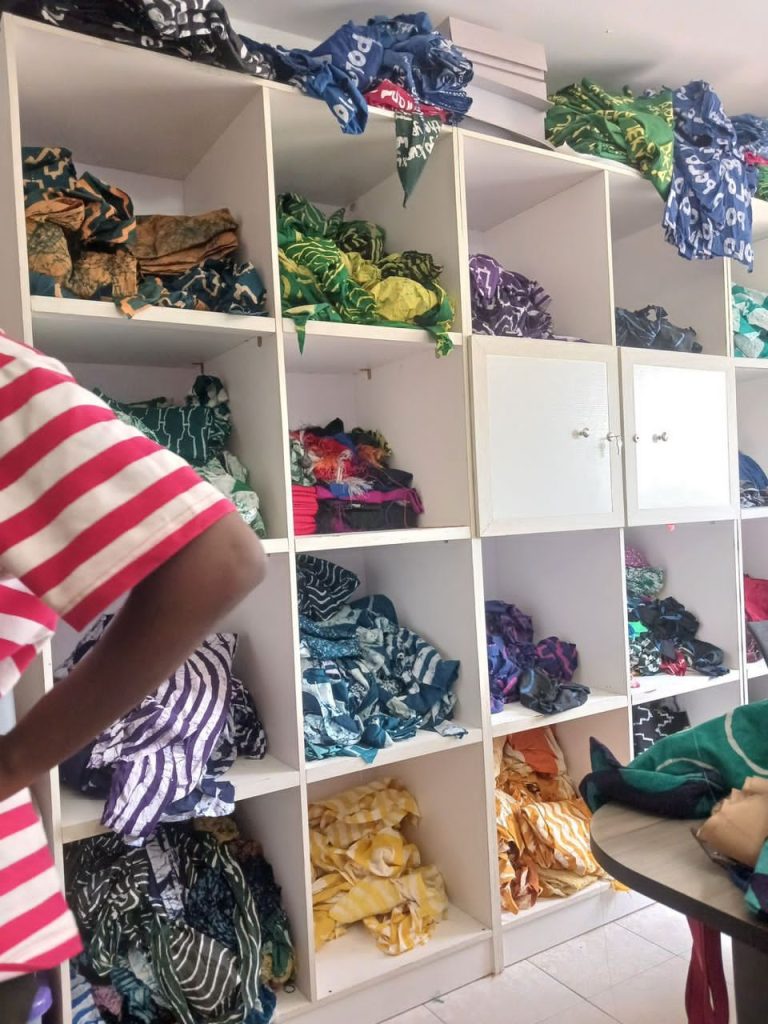
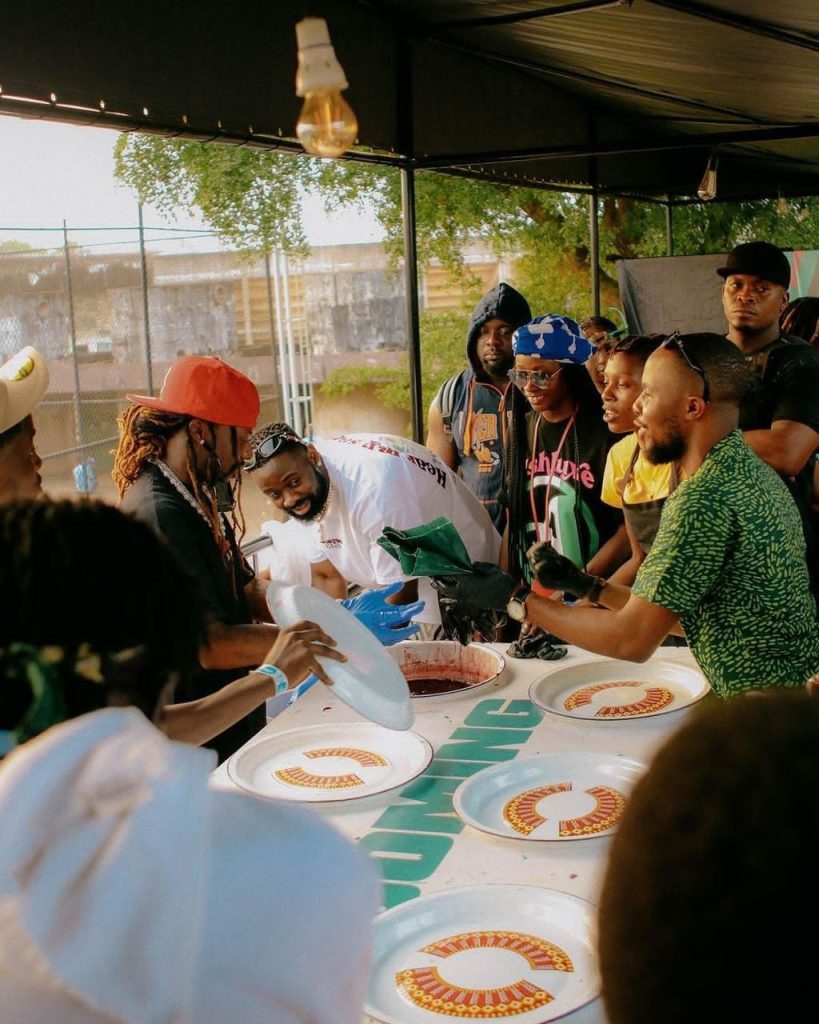
The Music, The Parties, The EnergyDecember in Lagos is a season unto itself. Last year’s lineup included Rema’s Homecoming, FlytimeFest featuring Olamide, Davido, and Ayra Starr, Rhythm Unplugged with Gunna, and The Bonfire Experience with Victony. The Experience Lagos drew hundreds of thousands to Tafawa Balewa Square.From Lekki to Victoria Island, the nights last until sunrise. Afrobeats, Afro-fusion, and Amapiano pulse through the streets. And in the middle of it all are the IJGBs, reuniting with childhood friends and remembering why Lagos, for all its chaos, feels like nowhere else on earth.
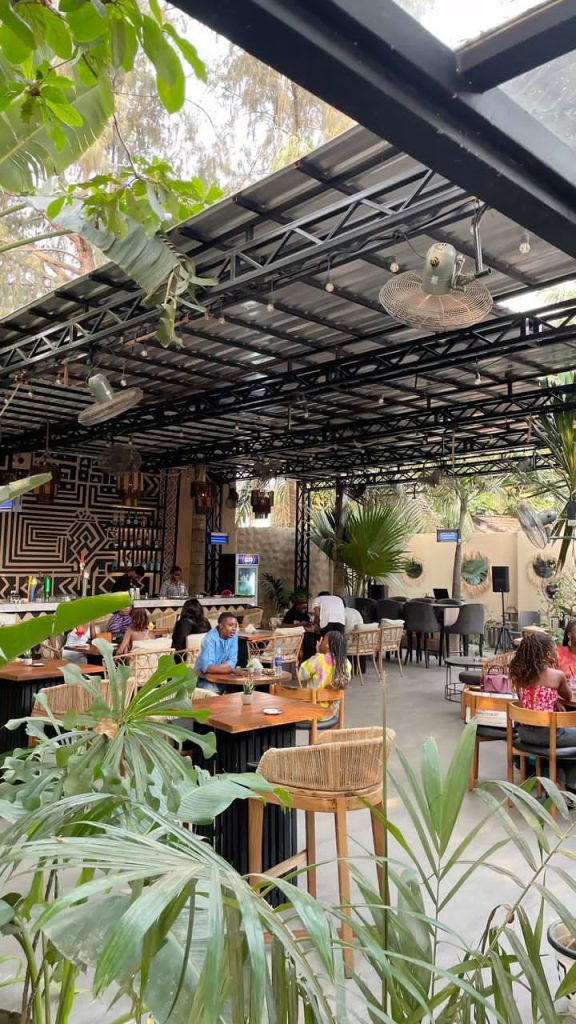
What It All MeansThe IJGB phenomenon reveals something important about the Nigerian diaspora: their relationship with home isn’t passive. They’re active participants in shaping contemporary Nigerian culture. Through their fashion choices, their platforms, and their presence, they’re influencing what Lagos becomes.When diaspora Nigerians faithfully wear Nigerian fashion abroad, they’re doing marketing that no campaign could buy. When they share their experiences online, they’re telling the world that Lagos is worth visiting, that Nigerian culture is worth celebrating.
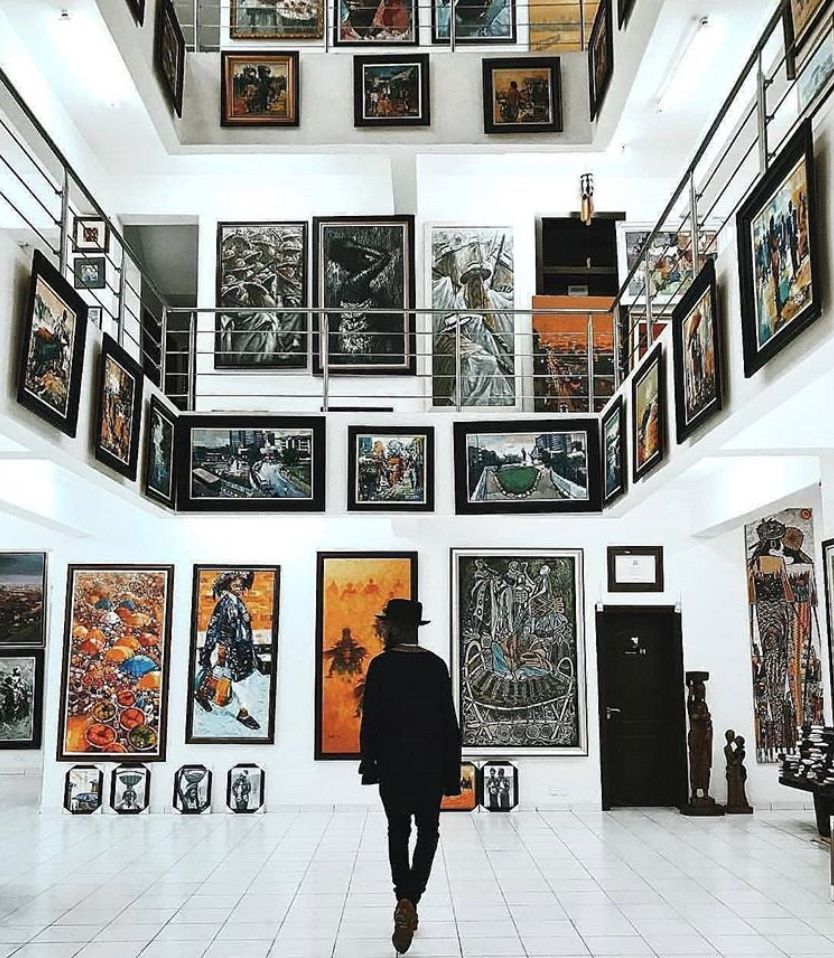
The IJGBs will keep coming back, for the braids, for the parties, for the jollof rice that tastes better at home, for the feeling of being surrounded by people who understand you without explanation.And Lagos will keep welcoming them home. Because for all the tensions and traffic, the IJGB season proves something beautiful: you can leave Lagos, but Lagos never really leaves you.
written by TERSUR SAMUEL ADZEGE.