

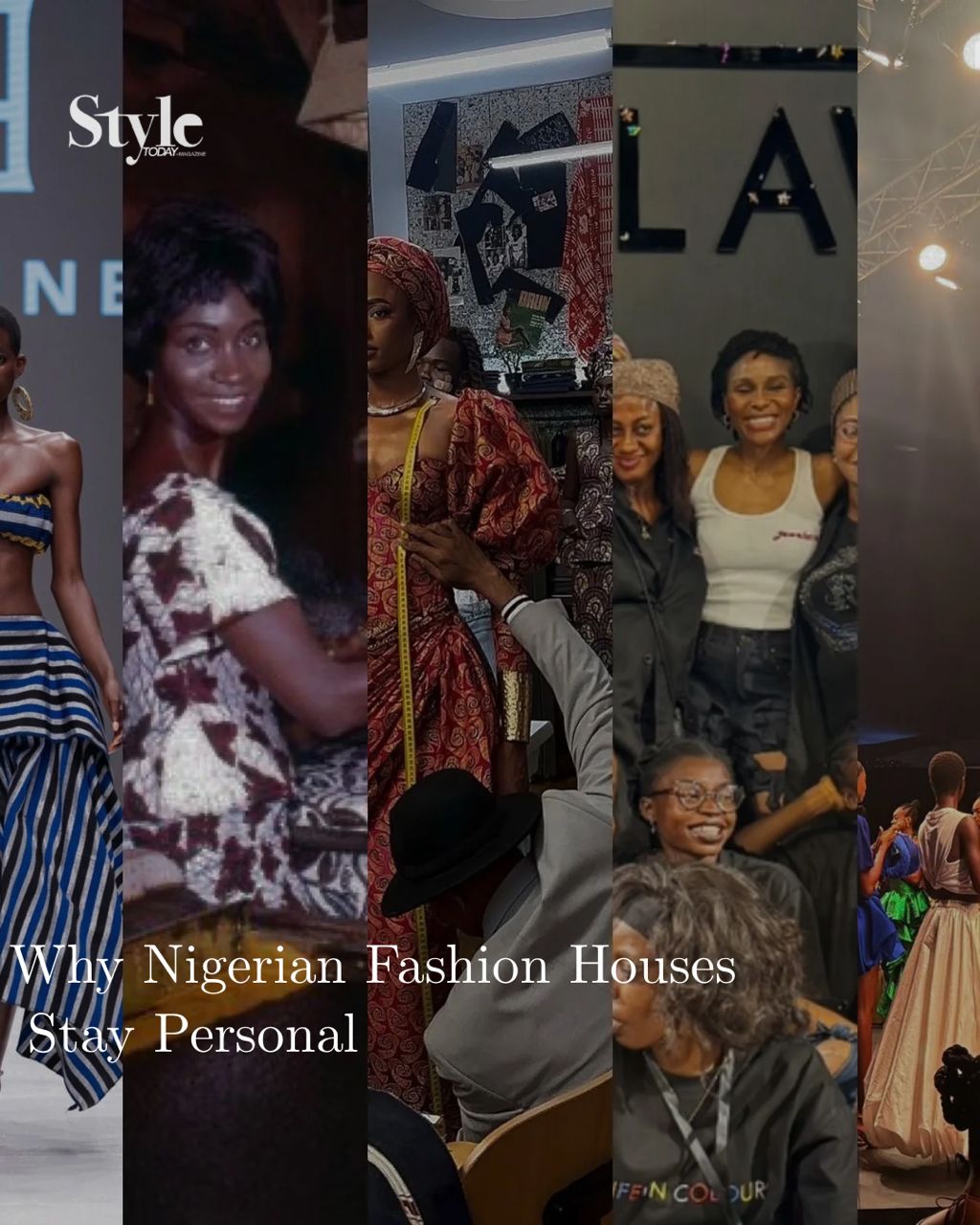
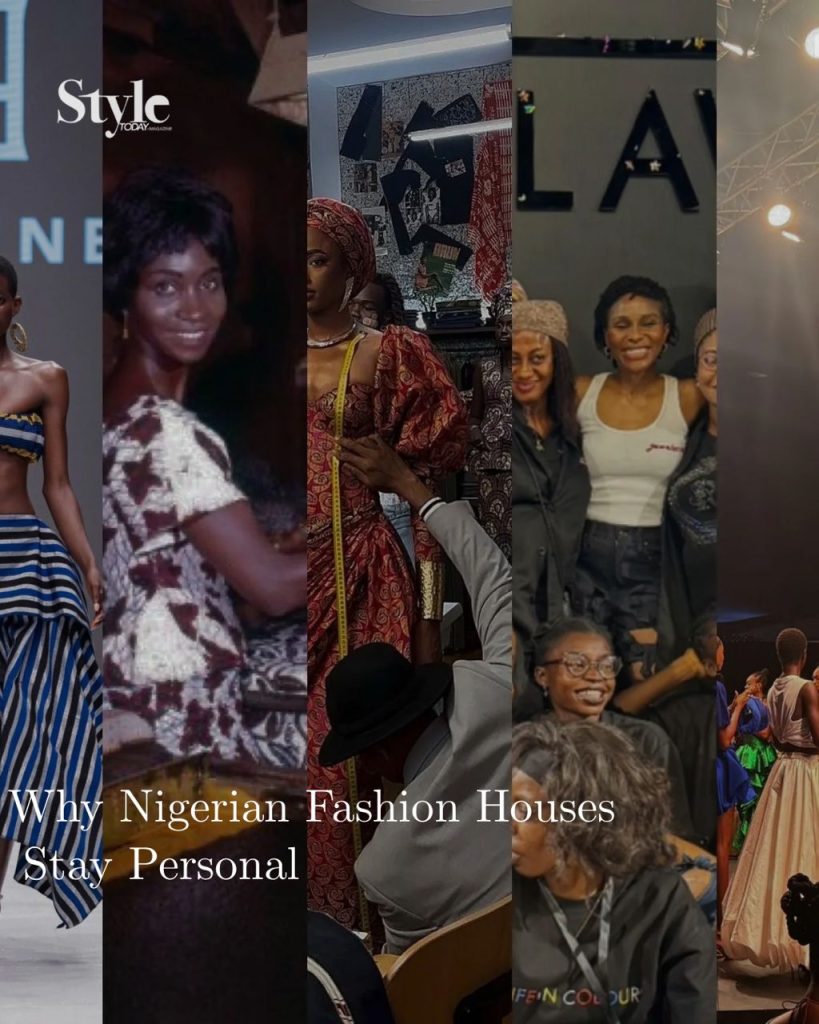
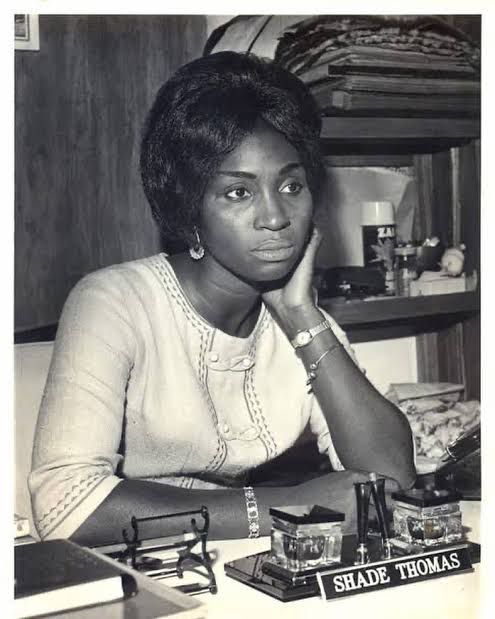
In global fashion, the creative director role is common. Designers move between houses, lending their vision to brands they don’t own. Think Demna at Balenciaga or Daniel Lee at Burberry. But in Nigeria, this simply doesn’t exist. Every major brand is still led by its founder.Shade Thomas-Fahm opened Nigeria’s first boutique in 1960 and at 92, she’s still here. The designers who built Nigerian fashion in the decades after are still running their own houses. Abba Folawiyo, who started in the 1970s, still leads House of Bunor. Maureen Onigbanjo of Maufechi and Funmi Ajila of Regalia By Fal are both actively designing their collections. These aren’t retired figures. They’re working designers who never handed their brands to someone else.
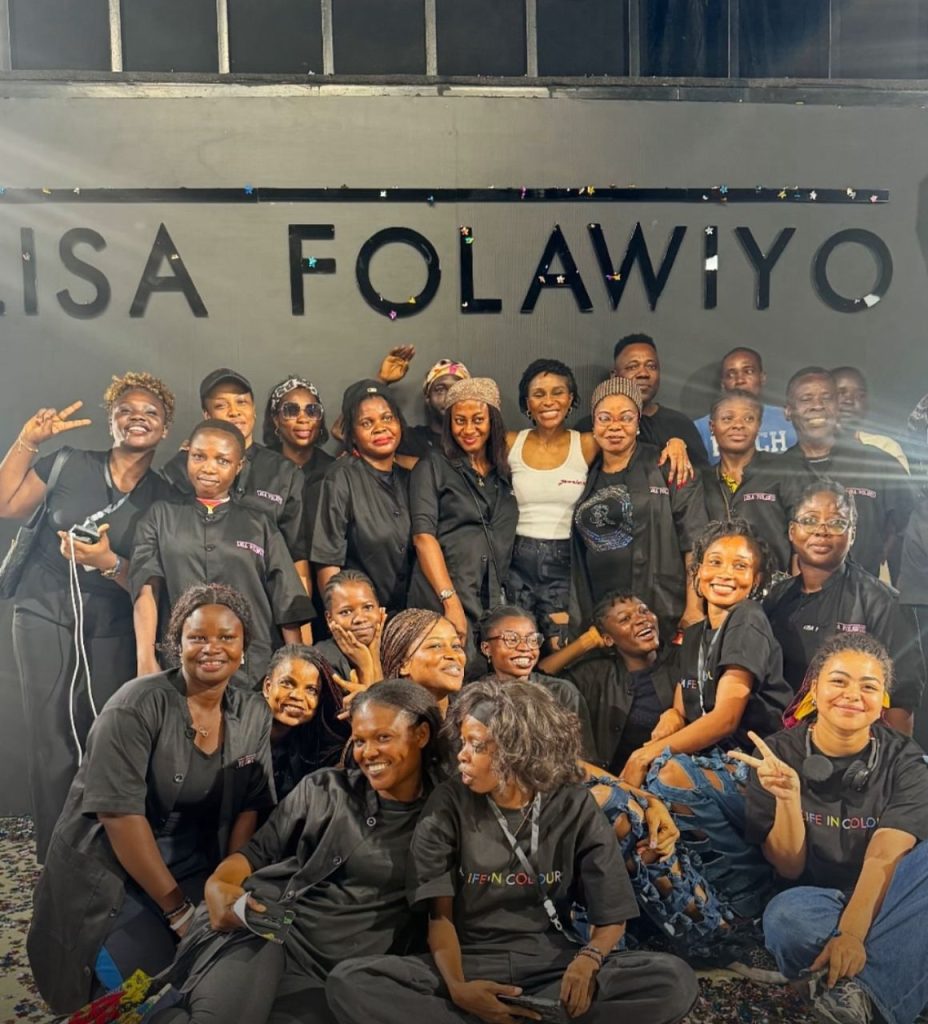
The same pattern holds for the generation that followed. Lisa Folawiyo, Lanre Da Silva Ajayi, Mai Atafo, Deola Sagoe. All still at the helm of their own brands. Even younger designers like Tokyo James, Kenneth Ize, Mowalola Ogunlesi, and Orange Culture’s Adebayo Oke-Lawal operate the same way. If you start it, you lead it.This isn’t an oversight. It’s a fundamentally different business model. Nigerian designers build personal brands that are inseparable from their names and vision. There’s no tradition of stepping back to let someone else take creative control. Ownership and creative direction are the same thing.
Western fashion houses were often started as family businesses that eventually became corporations, making it easier to bring in outside talent. Nigerian fashion is younger, more personal, and built differently. The designer is the brand. The brand is the designer.It’s not that Nigerian fashion lacks creative talent or business sophistication. It’s that the entire industry developed around a model where longevity means the founder stays in charge. Maybe that will change as brands mature and founders age. Or maybe Nigerian fashion will chart its own path entirely, as it always has.
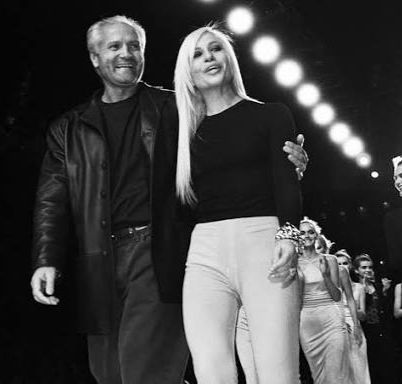
But there’s a legitimate business concern that complicates this path forward. Founders could, in theory, retain ownership while appointing a creative director to lead the design vision. The challenge is that truly talented creative directors don’t just execute someone else’s vision—they bring their own. They want to leave their mark, to reshape the brand in their image. Balenciaga under Cristóbal Balenciaga was about refined couture and sculptural elegance. Balenciaga under Demna is streetwear-inflected, ironic, sometimes confrontational. The transformation is total. For Nigerian founders whose personal identity is woven into every collection, handing over creative control to someone with their own strong vision might not feel like succession planning. It might feel like watching your life’s work become unrecognizable.
Written by Adzege Tersur Samuel
Edited by Tonye Hart